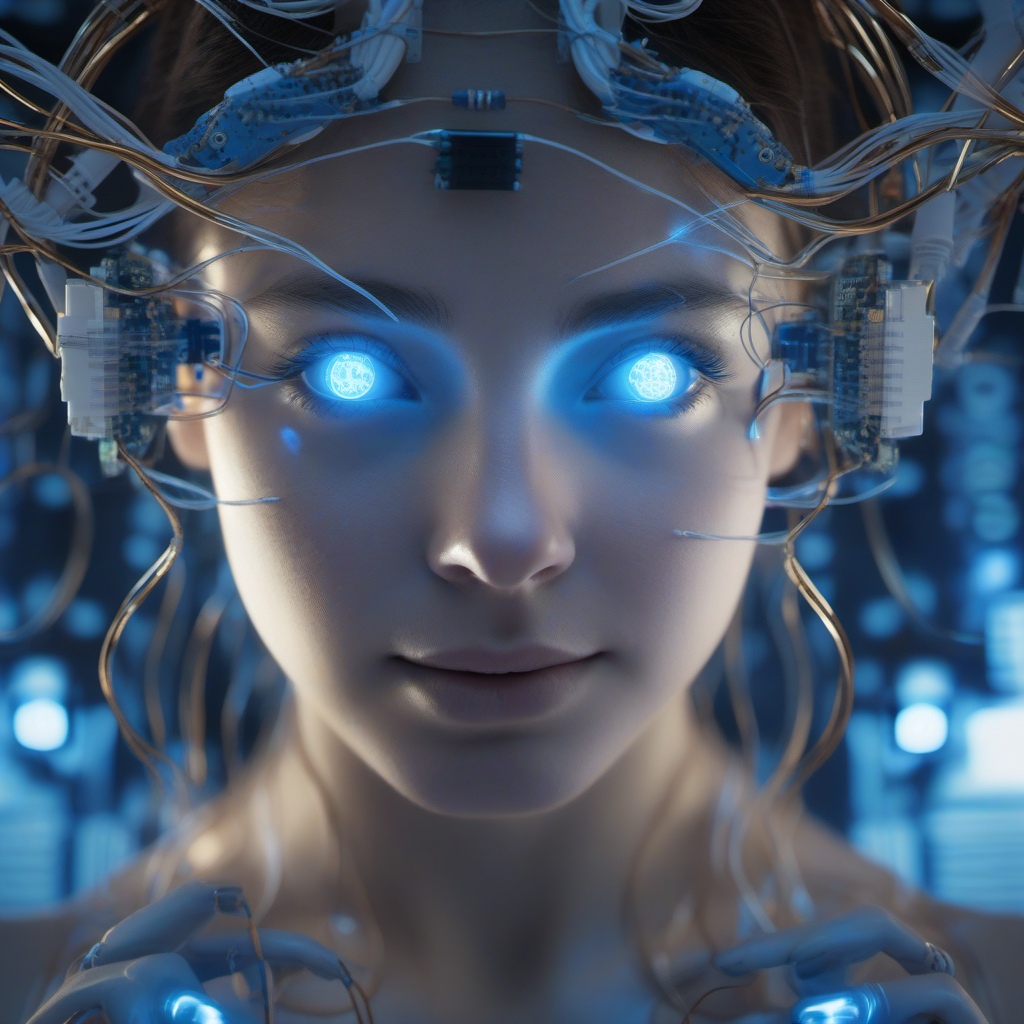
In a promising development for patients with untreatable conditions like sight loss and paralysis, researchers have discovered that advanced brain-computer interface (BCI) technology used for both touch and vision prostheses is remarkably similar. This revelation could accelerate the development of treatments for restoring lost senses. Led by Giacomo Valle from Chalmers University of Technology in Sweden, the findings were published in Nature Reviews Bioengineering.
## Bridging Sight and Touch with BCIs
Brain-computer interfaces (BCIs) are proving to be an effective tool for restoring lost senses such as vision and touch. These systems use microelectrodes implanted directly into the brain to establish a communication pathway between the brain and external devices, like cameras or bionic limbs. By bypassing damaged neural pathways, BCIs can stimulate specific brain regions, enabling patients to regain sensations like vision or touch.
Visual cortical prostheses (VCP) and somatosensory cortical prostheses (SCP) are two separate applications of BCIs. VCPs aim to restore vision by stimulating the visual cortex, while SCPs target the somatosensory cortex to restore touch. Despite their separate development over decades, the underlying technology and principles are nearly identical, as highlighted in Valle’s review.
## Parallel Development Without Collaboration
The fields of artificial vision and touch have evolved independently, with researchers attending different conferences and working with distinct patient groups. This lack of cross-communication has meant that potential synergies between the two fields have gone unexplored. Valle notes that both vision and touch share common neural and computational principles, where information from external stimuli is converted into electrical signals that the brain can process.
The review paper, “Restoring vision and touch with cortical microstimulation,” offers a comparative analysis of visual and sensory prostheses. It explores how these technologies can learn from each other, discussing cerebral cortex stimulation, electrode types, and the creation of artificial sensory experiences. By identifying common challenges, the review aims to foster collaboration between the two fields.
## Implications for Founders and Investors
The discovery that BCIs for vision and touch share similar foundations could have significant implications for the tech industry, particularly for startups and investors in Ireland and Europe. With the EU’s regulatory landscape, including the AI Act and GDPR, companies developing BCIs must navigate complex legal frameworks. However, the potential to address widespread medical conditions presents a lucrative opportunity.
For Irish and European investors, this cross-disciplinary approach could open new avenues for funding innovative healthtech solutions. Startups can leverage this knowledge to accelerate the development of more effective prosthetic devices, potentially reducing time to market and gaining a competitive edge. Engineers could focus on refining the technology to enhance the accuracy and efficacy of BCIs, making these devices more practical for everyday use.
## Looking Ahead
The identification of shared technological foundations between artificial vision and touch prostheses marks a pivotal moment in medical technology. As researchers from both fields begin to collaborate, the pace of development for BCIs is expected to increase, offering new hope for patients with sensory impairments. For Irish and European tech professionals, this represents an opportunity to lead in the development of cutting-edge health solutions, driving growth and innovation in the sector.