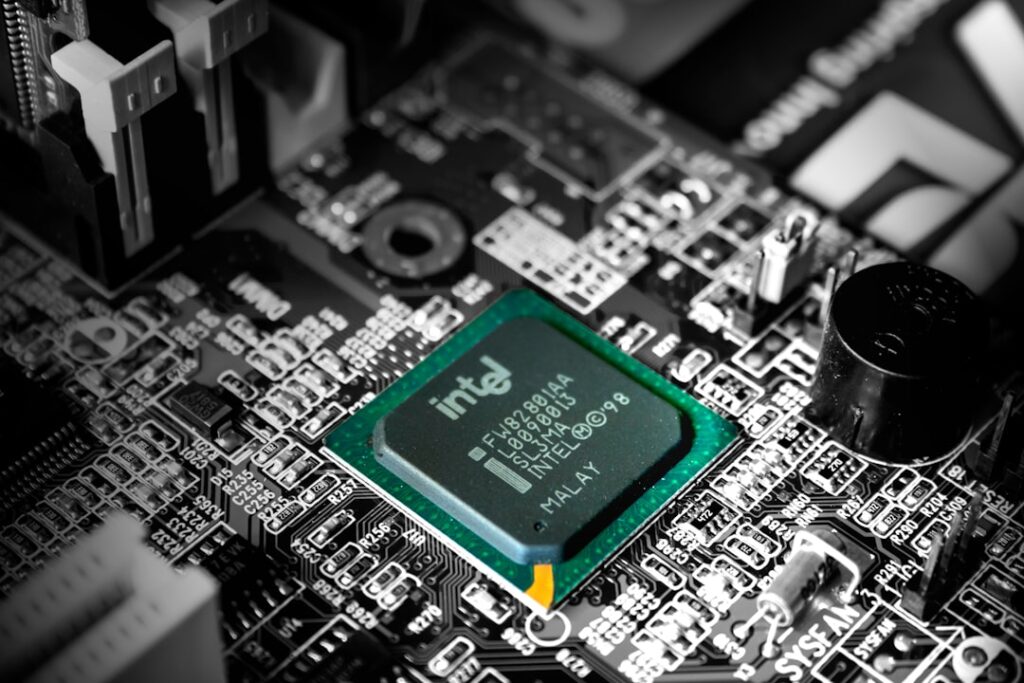
Intel has reported its strongest quarterly results in over a decade, driven by a surge in demand for AI infrastructure. The company exceeded market expectations with a revenue of $16.1 billion (€14.1 billion) for the second quarter, significantly outperforming LSEG’s forecast of $14.42 billion (€12.7 billion). This growth underscores the increasing importance of AI technologies and their potential to reshape the tech landscape, particularly in hardware and infrastructure.
### Understanding Intel’s AI Focus
Intel’s recent success is largely attributed to its strategic investments in AI infrastructure. The company has been focusing on developing chips and systems that cater to the needs of AI workloads, which require substantial computing power. Intel’s Xeon processors and Habana AI accelerators are specifically designed to handle these demanding tasks, making them attractive to enterprises looking to scale their AI capabilities.
The expansion into AI is part of Intel’s broader strategy to diversify its portfolio beyond traditional PC and server markets. By aligning its product offerings with the growing trend of AI and machine learning, Intel aims to capture a significant share of this burgeoning market. This focus on AI infrastructure comes as businesses globally race to adopt AI technologies, driving demand for powerful hardware solutions.
### Competitive Landscape
Intel’s strong performance highlights its competitive position in the AI hardware market, but it faces stiff competition from other tech giants like NVIDIA and AMD. NVIDIA, known for its GPUs, has been a dominant player in AI and machine learning, offering solutions that are widely used in data centers worldwide. AMD is also making strides with its EPYC processors, targeting similar markets.
Despite the competition, Intel’s comprehensive approach, which combines CPUs, GPUs, and specialized AI accelerators, provides it with a unique edge. The company’s ability to offer a complete ecosystem of products tailored for AI applications positions it well against its rivals. However, maintaining this edge will require continuous innovation and investment, especially as competitors also ramp up their capabilities.
### Implications for Irish and European Tech
Intel’s strong quarterly results and focus on AI have important implications for the Irish and European tech sectors. For Irish and European founders and engineers, the rising demand for AI infrastructure presents new opportunities for innovation and collaboration. Companies that can develop AI-driven solutions or enhance existing systems with AI capabilities are likely to find a growing market eager for cutting-edge technologies.
Investors in Ireland and across Europe should take note of the increasing importance of AI as a driver of business growth. With Intel’s success as a case in point, there is potential for substantial returns on investments in AI-focused startups and companies that support AI infrastructure. As the EU continues to refine regulations such as the AI Act, understanding compliance requirements will be crucial for these companies to successfully scale and operate within the European market.
### What’s Next for Intel and AI in Europe
Looking ahead, Intel’s continued investment in AI infrastructure will likely focus on expanding its product range and enhancing performance capabilities. The company is expected to further integrate AI technologies into its existing offerings, providing more powerful and efficient solutions for businesses worldwide.
For Irish and European founders, engineers, and investors, staying informed about advancements in AI infrastructure and regulatory changes will be key to capitalizing on emerging opportunities. As AI continues to evolve, those ready to adapt and innovate can expect to play a significant role in shaping the future of technology in Europe.
Originally reported by TechCentral.ie.