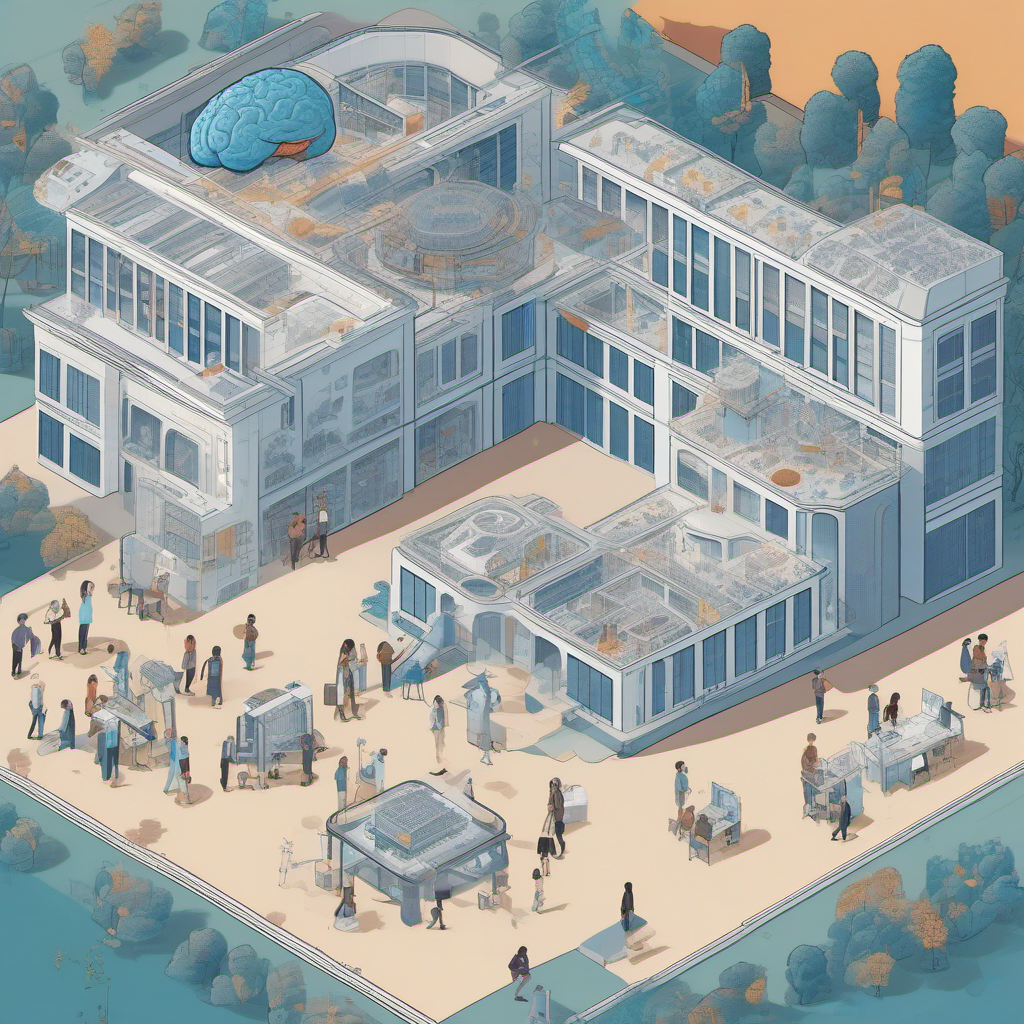
Irish Universities Urged to Invest in Human Intelligence Research Labs
As artificial intelligence (AI) continues to evolve, there’s a growing call for Irish universities to invest in human intelligence research labs. This push stems from the realization that while AI can store and process vast amounts of data, the unique capabilities of human intelligence remain unmatched in creativity and problem-solving. By establishing research labs focused on understanding and enhancing human intelligence, Irish universities could position themselves at the forefront of a critical and emerging field.
### The Role of Human Intelligence Research Labs
Human intelligence research labs focus on understanding the cognitive processes that underpin human thought, problem-solving, and creativity. Unlike AI, which excels in data storage and retrieval, human intelligence is about using memory and knowledge to achieve desired outcomes. For instance, a mechanic can diagnose a car problem based on a sound, or a neurologist can assess a baby’s health from its cry—demonstrating the nuanced application of knowledge that AI still struggles to replicate.
These labs aim to decode how the brain processes information and how these processes can be enhanced. Such research could lead to breakthroughs in education, mental health, and cognitive augmentation. By exploring the mechanisms of human intelligence, researchers can develop new ways to foster creativity, improve learning, and enhance decision-making skills.
### Competitive Context and the European Landscape
Currently, AI research dominates the landscape, with significant investments funneled into developing increasingly sophisticated algorithms. However, the focus on AI has overshadowed the potential of human intelligence research. Few institutions globally are dedicating resources to understanding the intricacies of human cognition, offering Irish universities a unique opportunity to lead in this niche.
In Europe, the regulatory landscape is shaped by frameworks like the AI Act and GDPR, which govern data usage and AI deployment. Human intelligence research, less encumbered by such regulations, could offer a less restrictive path for innovation. By investing in this area, Irish universities can differentiate themselves from counterparts that are predominantly focused on AI.
### Implications for Irish and European Stakeholders
For Irish and European founders, engineers, and investors, the establishment of human intelligence research labs could open new avenues for innovation and commercialization. Startups could emerge from university research, focusing on cognitive enhancement tools or educational technologies that leverage insights from human intelligence studies. Investors, in turn, could find lucrative opportunities in funding these nascent ventures.
Moreover, engineers working in the tech industry could benefit from a better understanding of human cognition, applying these insights to create user-centric technologies that complement human capabilities rather than replace them. By fostering collaboration between tech developers and cognitive scientists, Ireland could become a hub for cutting-edge technology that enhances human potential.
### The Road Ahead
As AI continues to evolve, the need to understand and enhance human intelligence will only grow. Irish universities stand at a crossroads: they can either follow the well-trodden path of AI research or carve out a distinctive niche in human intelligence studies. By choosing the latter, they could not only elevate their global standing but also drive meaningful innovations that benefit society.
For Irish and European founders, engineers, or investors, the establishment of human intelligence research labs offers a rare opportunity to pioneer a field that could redefine the intersection of technology and human capability.