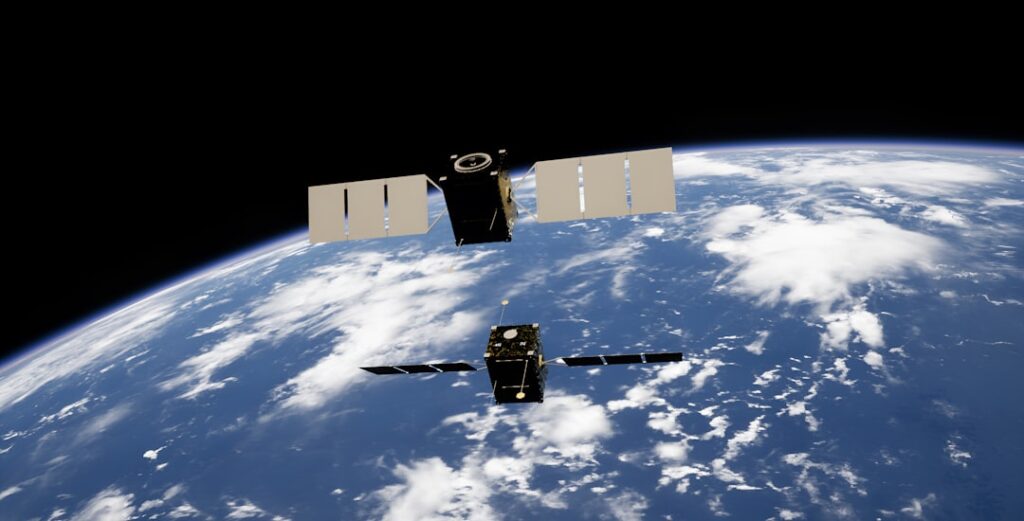
Vodafone Ireland, in collaboration with the Office of the Government Chief Information Officer (OGCIO), has successfully tested satellite technology integration to enhance connectivity for emergency services. This development is crucial as it ensures that emergency services remain operational during severe weather events or major outages, where traditional mobile networks might fail due to power supply disruptions.
## Understanding the Satellite Technology
The trial, conducted on Clare Island, Co. Mayo, marks a first in Europe for satellite-enabled mission-critical communications (MCx). Vodafone Ireland, alongside Satellite Connect Europe, used AST SpaceMobile’s satellite constellation to demonstrate that standard smartphones can maintain voice and broadband data services for frontline responders. This is particularly useful when conventional coverage is compromised.
The successful satellite-enabled MCx group call was made to David Lund, Coordinator of the European Union Critical Communications Service (EUCCS) in the UK. This demonstration underscores a crucial advancement in ensuring continuous communication for emergency services, potentially setting a precedence for similar implementations across Europe.
## The Competitive Landscape
Vodafone Ireland’s test is part of a broader initiative to strengthen digital infrastructure, underscored by a €360 million investment in network and digital capabilities. With Ireland’s first test and trial license for direct-to-device satellite technology, Vodafone Ireland is ahead in the race to integrate satellite connectivity with terrestrial networks.
The competitive edge comes from Vodafone’s collaboration with regulatory bodies like ComReg to establish frameworks supporting the rollout of satellite services to both emergency and general consumers. This positions Vodafone Ireland uniquely in integrating satellite technology into national infrastructure, a step not yet widely adopted by other telecom players in Europe.
## Implications for Stakeholders
For Irish and European founders, engineers, and investors, this development highlights the potential of satellite technology in enhancing the resilience of communication networks. This could spur new ventures and investments in satellite technology applications beyond emergency services, such as rural broadband solutions and IoT connectivity in remote areas.
The trial’s success also suggests a shift in how critical communications can be structured, with satellite technology providing a reliable alternative to traditional networks. For engineers and developers, this opens opportunities to innovate applications that leverage satellite connectivity for various sectors beyond public safety.
From a regulatory perspective, the integration of satellite technology must align with EU guidelines, like the AI Act and GDPR, to ensure data protection and privacy standards are upheld. Investors should watch how regulatory frameworks develop to support these technologies, as this could impact the scalability and commercial viability of satellite-enabled services.
## Looking Ahead
Vodafone Ireland’s next steps include further technical and regulatory engagement to expedite the rollout of satellite broadband connectivity. For Irish and European tech stakeholders, this evolution presents a chance to explore satellite technology’s broader applications, potentially leading to new business models and partnerships in the tech ecosystem.